
Resource Management
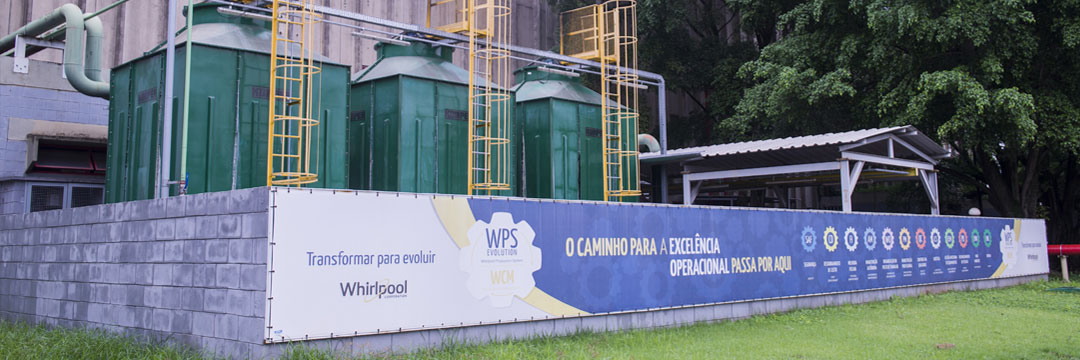
Although greenhouse gas emissions and energy management are the most material environmental impacts across our operations, we also work to improve our water and waste management and support for biodiversity.
Water
Water is a critical resource we rely on to manufacture our products. Across our operations, our water management strategy is guided by a commitment to water stewardship and continuous improvement. We maintain high standards which, in many locations, exceed regulatory expectations.
We are committed to reducing water intensity by 1% year-over-year globally, with a 3% reduction in water-stressed regions. Additionally, as a signatory to the CEO Water Mandate under the United Nations Global Compact, we are committed to action across six key areas of water stewardship, including direct operations.
To manage water effectively and mitigate risk, we:
- Monitor water intake, including from municipal sources, surface water, groundwater extraction and rainwater harvesting. We also monitor water discharge and the volume of water reused after treatment.
- Leverage World Class Manufacturing (WCM) Environmental Pillar: We identify all of our environmental aspects and impacts and utilize risk ranking and cost analysis tools to prioritize and address those with the greatest impact.
- Assess current and future water risks across our different manufacturing locations, leveraging the World Resources Institute’s Aqueduct tool for analysis.
- Prioritize water use reduction at sites located in water-stressed regions, such as our manufacturing facilities in Mexico.
Water Management in Latin America
Our plants in Latin America utilize benchmark practices for water stewardship, integrating smart data collection with physical infrastructure to reuse treated wastewater and harvest rainwater for on-site operations.
- In Celaya, Mexico, we reuse 100% of the sanitary wastewater treated on site for irrigation.
- At our technology center in Rio Claro, Brazil, all effluent is treated at an internal wastewater treatment plant, enabling nearly 100% internal reuse of the volume treated.
- Manaus and Joinville plants are equipped to source water needs directly from rainwater harvesting systems.
We also invest in operational efficiencies and technology to maximize reuse and reduce water intensity:
- Wastewater Treatment and Reuse: We treat all industrial and sanitary discharge from our manufacturing facilities, either on site or externally, adhering to local legal requirements. At some of our sites, we have made additional investments in water treatment technology to allow for on-site water reuse.
- Process Innovations: We have developed robust coating systems for metal corrosion protection that use nanoceramic conversion instead of phosphating, a process that is less chemical- and water-intensive.
- Monitoring Technology: We have installed real-time metering technology at some sites, enabling us to calculate water loss and streamline efficiency projects.
Waste
Our approach to managing waste in operations is anchored by our commitment to circular economy principles and supported by WCM, which facilitates investments in projects aimed at reducing waste generation, increasing recycling efforts and promoting material reuse.
We continually strive to improve waste management practices across our facilities. In 2012, we first set our goal to reach Zero Waste to Landfill (ZWtL), launching our journey to reduce waste and improve recycling. By 2022, we successfully achieved a 95% waste diversion rate across all large manufacturing sites. Building on this momentum, we have established a higher standard, and all of our large global manufacturing sites have maintained a waste diversion rate of 97% or higher. We were able to drive this progress through improvements, such as:
Our Waste Management Targets:
- Drive ZWtL Diversion: Maintain at least 97% diversion from landfill and incineration without energy recovery in all our manufacturing sites, following the UL ECVP 2799 standard.
- Reduce Waste Generation, With a Focus on Hazardous Waste: We monitor total and hazardous waste generated intensity and have set specific reduction targets for each site.
- Reducing waste generation on site through WCM Environment and Energy pillar projects (e.g., installing equipment to extract water from used oil)
- Developing new suppliers and alternatives to disposal — e.g., polyurethane, cafeteria waste, wooden crates, LDPE plastic and paper packaging — that were previously sent to landfill
- Working with vendors and suppliers to increase use of returnable packaging and containers (e.g., washed drums, repaired wooden pallets)
Since we set a goal to reduce hazardous waste generation in 2022, our hazardous waste intensity (per product produced) has consistently improved.
Biodiversity
As a global company, Whirlpool Corporation operates in many types of ecosystems. Although biodiversity is not one of our material topics, we aim to protect life-sustaining resources for future generations. Through site-specific programs, our actions focus on operations located in ecologically sensitive areas. These programs include:

Sustainable Pathway program in Joinville, Brazil: Boasting 174,522 square meters of protected green area, our Joinville site developed a walking path where people can learn more about the local fauna and flora through visual information boards. Along the path, the site also implemented the WBee project, a dedicated area to preserve local species of stingless bees and support pollination of local flora. Through this initiative, employees, students and local authorities are able to visit and learn more about the biodiversity of the region.

Reforestation in the mountains of Coahuila, Mexico: We actively support the long-term environmental restoration of the mountains of Coahuila and the metropolitan area of Nuevo Léon, Mexico, a region that has historically suffered from severe forest fires. Every year, Whirlpool employees and their families volunteer to plant additional trees in the area. Since 2017, more than 5,000 trees have been planted, directly supporting the recovery of local biodiversity.
5,000+ trees Planted by Whirlpool employee volunteers in the mountains of Coahuila, Mexico

Our Employees are Eco-Conscious in the
Home and Office (ECHO)
With chapters in North America and Latin America, the ECHO employee environmental group champions sustainability initiatives across multiple locations, empowering employees worldwide to become active changemakers.
The group supports on-site and community programs, including vegetable gardens, a monarch butterfly waystation to aid in butterfly migration and trash clean-up efforts in local parks and on beaches and roads. In our facilities, ECHO has also led initiatives to reduce waste with compostable cafeteria containers, plastic and snack wrapper collection for recycling and reusable mugs in kitchenettes.