
Products & Innovation
Our legacy of product leadership is driven by intellectual curiosity, innovation and the desire to deliver an exceptional experience for consumers. We also seize every opportunity to build sustainability into our products without sacrificing performance.
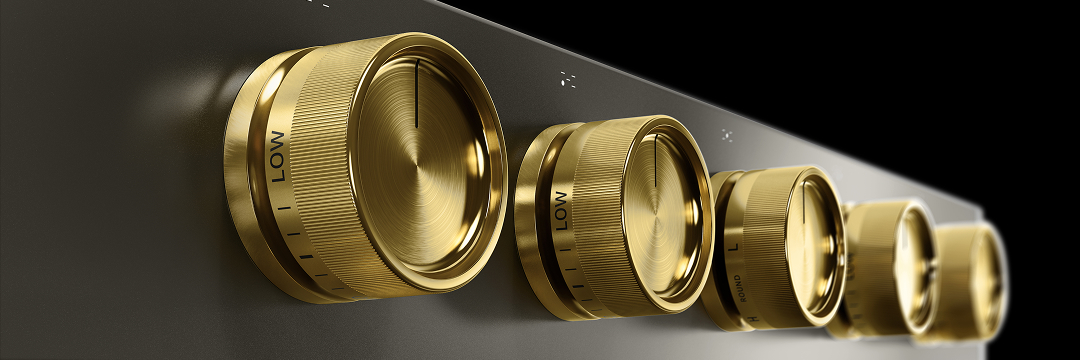
By designing products with the needs of consumers and the planet in mind, we work to reduce reliance on nonrenewable resources, lower our carbon and water footprint and maintain standards of excellence for quality and performance.
Learn more about our game-changing products and award-winning innovations on our Innovation page.
Our Legacy of Innovation
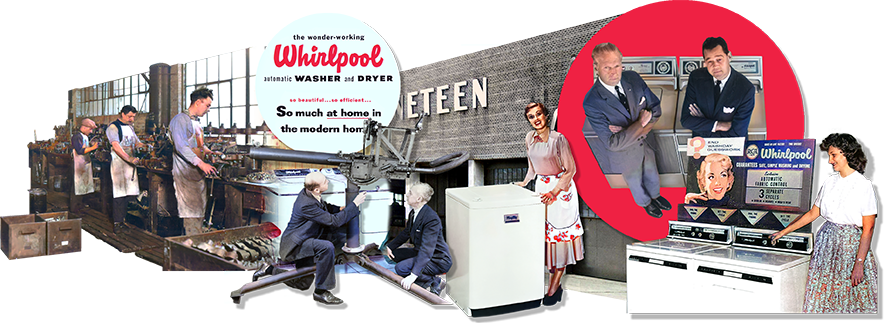
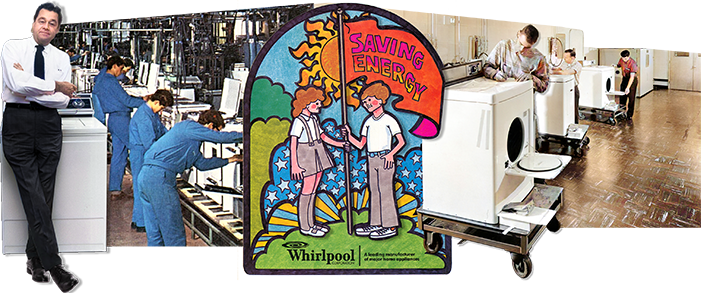
Whirlpool Corporation has long been an innovator in laundry technology, meeting the needs of consumers in new ways while improving both energy and water efficiency. Our leadership in laundry includes the following industry firsts.
- 1911
First electric wringer clothes washer - 1938
First washer with motorized agitation - 1940
First automatic washer

- 1957
First dryer that sensed when clothes were dry enough - 1961
First combination washer/dryer
- 1998
First energy- and water-efficient top-load washer - 1999
First large-capacity front-load washer in the U.S.
- 2014
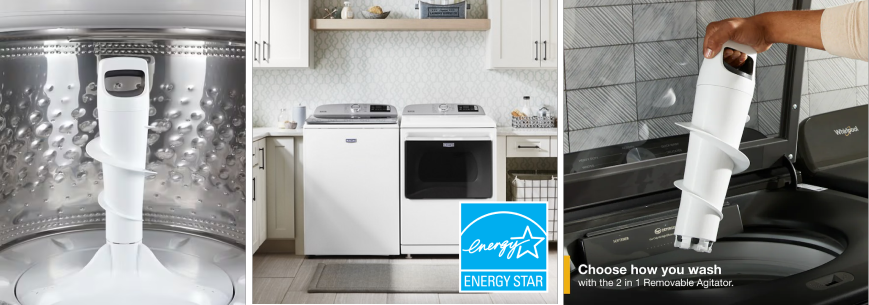
First ENERGY STAR®-certified dryers - 2021
Industry-first 2 in 1 removable agitator washing machine
-
TODAY
we continue to embrace this spirit of innovation in each of our product categories, developing products that deliver on our mission to improve life at home and advance sustainability.
Laundry
We continue to increase investments in high-efficiency washer and dryer innovation. Our laundry products include environmentally sustainable features on select models such as:
Delayed Start: This functionality allows consumers to set washers or dryers to start at a later time, potentially allowing them to take advantage of off-peak electricity rates.
Auto Sensing: This feature automatically adjusts water levels in washers and temperature levels on dryers based on load size to help save water and energy.
Eco Mode: Using this feature can save up to 15% of water and 40% of electricity by adjusting resource consumption based on what is ideal for the specific load.
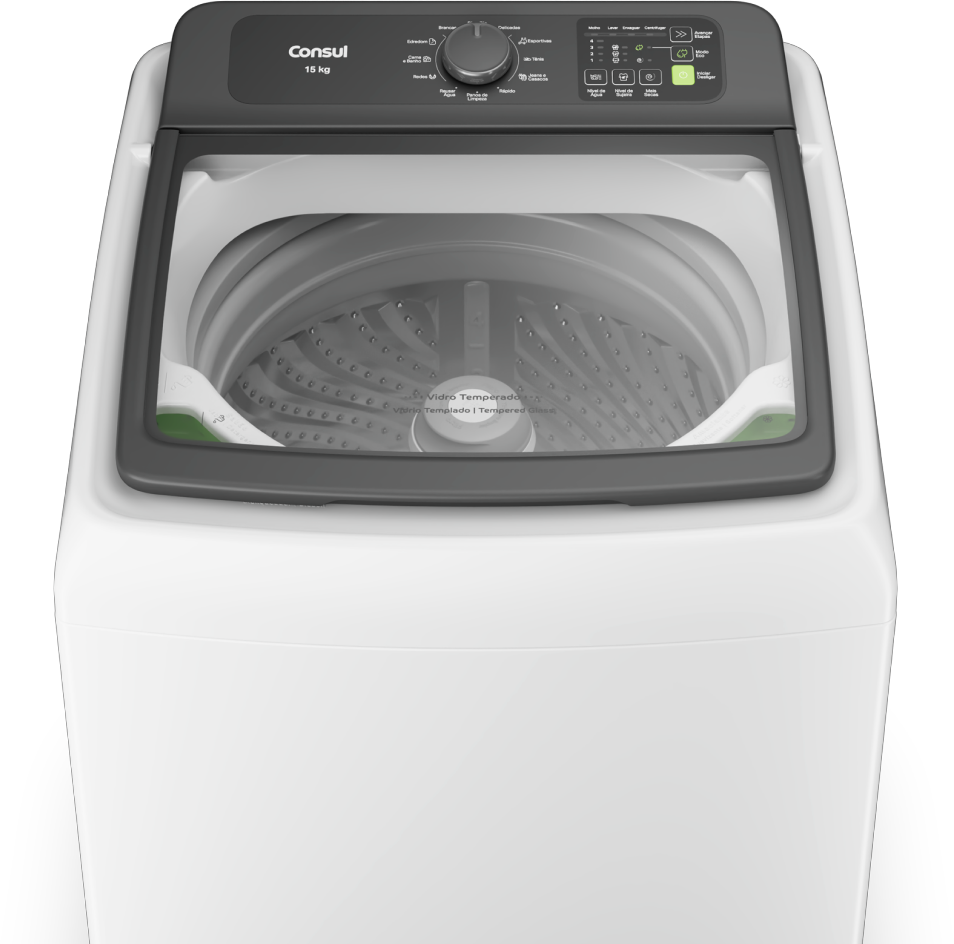
Water Reuse: Through water reuse capabilities, consumers can reuse water for other purposes in their homes.
Manual Resource Guidance:
Features like water level indicators and measured dosage guides help consumers use the ideal amount of water and laundry powder for each wash.
In addition, our ENERGY STAR-certified clothes washers are in the GetWaterSmart Product Directory, North America's first single-location listing of certified water-efficient products.
Cooking
Through investments in cooktop and freestanding range technology, we offer electric, gas and induction cooking solutions that meet consumers’ needs. We reduce material use and energy use through product integration, including:
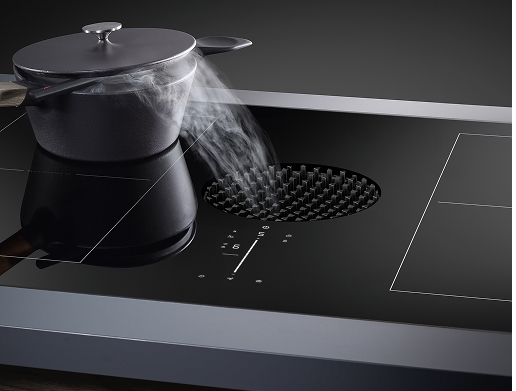
Induction Cooktops: With better heat transfer performance than gas or electric cooking, induction cooktops support more efficient energy usage.
Induction Downdraft Cooktop Technology: Available in North America, this revolutionary technology eliminates the need for a separate overhead ventilation unit.

Microwave-hood Combinations: As a unique, single product solution, select microwaves deliver the benefits of multiple standalone products, such as microwaves, grills, air fryers and ventilation hoods.
Refrigeration
In refrigeration, we have introduced multiple innovative product solutions that help increase energy efficiency, improve food preservation, increase capacity and support circular economy principles. Recent innovations include:
Low-Global Warming Potential (GWP) Blowing Agents: In the late 1990s, Whirlpool began transitioning to climate-friendly, low-GWP blowing agents used in appliance manufacturing. As of 2025, we have transitioned over 95% of all globally manufactured refrigerators to climate-friendly, low-GWP refrigerants.

Post-Consumer Recycled (PCR) Resins: Beginning in 2023 in Latin America, PCR materials were integrated in the manufacturing of refrigeration components that don’t have direct contact with food in selected applications.
New Energy Standard: Starting in 2025, all the refrigeration models sold in Brazil follow the country’s new standard requiring new models to have minimum energy efficiency levels. These new models can provide up to 38% energy savings to consumers.
See the Second Life section to learn more about how Whirlpool Corporation refrigerators help fight food insecurity across the U.S. through refurbished product usage.
Small Appliances
The KitchenAid stand mixer, first launched in 1919, remains a powerful tool in the kitchen and has some of the best environmental impact ratings in its category (based on an internal Life Cycle Assessment). We strive to deliver small appliances from the KitchenAid brand with the same high standards, including:
Repairability and Refurbishment: The KitchenAid brand strives to reduce waste through the repairability of products, recycling of high-quality parts and by offering certified refurbished stand mixers.
Category Leadership: A 2024 LCA found the KitchenAid stand mixer leads its category in areas like materials choices, electricity consumption and climate impact during product life.

Sustainable Packaging: KitchenAid is also working to transition to expanded polystyrene (EPS)-free packaging for small appliances.
Dishwashers
We have achieved significant sustainability progress in the dishwasher category through innovation in product efficiency, manufacturing and inclusive design, including:
Water Use: Whirlpool dishwashers use significantly less water and energy than washing dishes by hand, saving an average of 2,500+ gallons of water per year.
Eco Series Designation: In addition to a wide variety of ENERGY STAR-certified dishwashers, we offer dishwashers with an Eco Series designation. These dishwashers use 10% less energy and save more water compared to dishwashers meeting the minimum 2023 Department of Energy efficiency standards.
GetWaterSmart: Our ENERGY STAR-certified dishwashers are also included in the GetWaterSmart Product Directory, which features certified water-efficient products to help customers minimize water use.
Door Opening System: In 2024, we introduced a system on select models that uses fresh air for drying, reducing energy consumption and improving drying performance.
Delayed Start: This feature allows consumers to run their dishwasher during off-peak hours to reduce strain on the grid and potentially save money.
Spin&Load Accessory: In addition to the Americans with Disabilities Act (ADA)-compliant dishwasher models, we now offer a Spin&Load Rack, which rotates from a center point, making the dishwasher more accessible for consumers.


Our Findlay, Ohio, plant is the largest dishwasher-producing plant in the Americas and the first Whirlpool Corporation manufacturing facility to utilize wind energy.
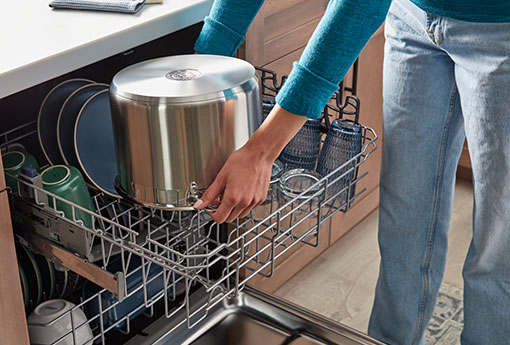
Using a dishwasher can be up to
5x more water-efficient than hand washing.
Hand washing one load of dishes can use 20 gallons of water, whereas water- and energy-efficient dishwashers use as little as four gallons. Whirlpool Corporation dishwashers have been donated to Habitat for Humanity's BuildBetter with Whirlpool homes to help homeowners reduce water usage.
Garbage Disposals
Following our acquisition of InSinkErator in 2022, Whirlpool Corporation has supported sustainable innovation in the garbage disposal category. Benefits and sustainability features include:
-
Waste-to-Landfill Reduction: Using a garbage disposal can reduce the amount of food waste taken to landfills, reducing methane emissions that can affect climate change. InSinkErator garbage disposals are designed to grind food waste into fine particles that flow to a wastewater treatment facility, where it can be converted into renewable energy and beneficial fertilizer.
- Using a garbage disposal in conjunction with wastewater treatment without anaerobic digestion will lower Global Warming Potential (GWP) by at least 50% compared to landfills.
- Using a garbage disposal in conjunction with wastewater treatment with anaerobic digestion will lower GWP by at least 90% compared to landfills.
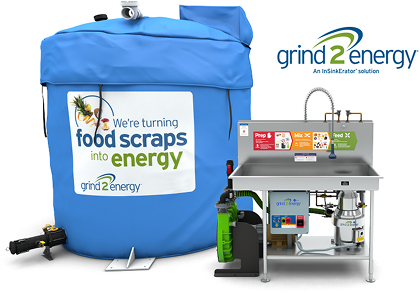
- Grind2Energy: This non-sewer-based system helps universities, sports venues and businesses meet their sustainability goals by transforming inedible food waste into energy. The system grinds food waste into a slurry, which is then transported to an anaerobic digestion facility. Grind2Energy System maintains a network of trusted haulers and anaerobic digestion facilities across the U.S. where food waste slurry is converted into renewable energy and nutrient-rich fertilizer. The Grind2Energy System and program together take food waste recycling to the next level by recovering more resources than traditional disposal methods, such as landfilling and composting.
- Recyclability: Because garbage disposals are predominantly made of metal, they are easy to recycle at end-of-life.
Grind2Energy System is helping food waste generators transform inedible food scraps into energy. Here’s how it works.
- Organic food waste is collected and placed into the grind chamber.
- Grind2Energy System grinds food waste quickly and efficiently.
- The resulting slurry goes into a holding tank.
- A liquid waste hauler transports the slurry to a local anaerobic digestion (AD) facility.
- The AD facility recycles the food slurry by recovering water and converting captured methane into renewable energy including electricity and compressed natural gas.
- The remaining nutrient-rich organic material can be used as a beneficial natural fertilizer.
- The natural nutrient-rich fertilizer is utilized to grow more food.

InSinkErator Down With Food Waste: This consumer education campaign shows consumers how using a garbage disposal in conjunction with their green bin helps divert the maximum amount of food waste from landfills, reducing methane emissions that can affect climate change.
Learn more about the environmental benefits of our garbage disposal technology here.